






In recent years, corporate sustainability has faced slowing momentum and even pushback in parts of Europe and America. In contrast, several Asian countries are making tangible progress. China, Japan, and Thailand are not just staying the course; they are moving forward. These countries are actively developing laws and guidelines to strengthen corporate sustainability obligations and ESG due diligence requirements.
This is not a passing trend. What we witness is a shift: a long-term and steady commitment. Sustainability requires exactly this kind of sustained effort. The rest of the world must take notice.
China: the go-getter
China’s approach to corporate sustainability is taking a clear shape, especially on the environmental front. As part of its broader climate ambitions, China aims to peak carbon dioxide emissions before 2030 and achieve carbon neutrality before 2060. To support these ambitions, the country has taken concrete steps to establish a unified and structured corporate ESG due diligence regime nationally. This system is designed with international alignment in mind.
In 2024, China announced the Chinese Corporate Sustainability Disclosure Standard (CSDS) and subsequently published its Basic Standards in December. This provides a unified framework that allows companies to report on sustainability performance with alignment to global norms such as the ISSB and the EU’s Corporate Sustainability Reporting Directive (CSRD). In April 2025, the Draft Guidelines for CSDS No. 1 – Climate (Trial) was also published, and it introduces mandatory disclosure elements such as Scope 1, 2, and 3 emissions, transition plans, internal carbon pricing and climate scenario analysis.
That same month, the draft Environmental Code was published by the National People’s Progress. It consolidates over 30 existing laws into a unified framework with 1,188 articles across five chapters to address issues such as pollution prevention, ecological conservation, and green development. Specifically to sustainability disclosure, the Code introduces mandatory greenhouse gas disclosure for key emitters and legally requires major polluters to publish timely emissions data. It also sets binding emissions caps and strengthens requirements for Environmental Impact Assessments and pollution discharge permits.
Given China’s role as a global manufacturing hub, these developments can have an outsized positive impact on labour and environmental conditions worldwide. At a time when the EU and US are grappling with resistance on ESG and sustainability, China sends a very different message: environmental sustainability is non-negotiable for our future.
Japan: prudent and methodical
As the fifth largest economy, Japan has traditionally taken a cautious approach to due diligence. For years, many companies in Japan have relied on self-assessment tools like customised checklists and questionnaires. This often results in duplicated efforts for the same suppliers and a lack of transparency.
The landscape is now changing. With the global trend for common standards with emerging international regulations and market pressures, Japan is gradually setting the foundations for a more coherent and internationally aligned due diligence system. The Ministry of Economy, Trade and Industry (METI) issued the Guidelines on Respecting Human Rights in Responsible Supply Chains to provide companies with practical steps when implementing human rights due diligence to identify and mitigate risks of labour abuse, forced labour, and other violations. Though not legally binding, they represent a shift towards an emphasis and shared understanding of responsible business conduct.
Japan is also developing industry-specific due diligence frameworks. A prominent example is the Japanese Audit Standard for Textile Industry (JASTI), an initiative led by METI in collaboration with the textile industry. Launched in April 2025, JASTI sets clear benchmarks for the Japanese textile and garment industries to ensure their factories uphold International Labour Organization (ILO) conventions and domestic regulations. amfori was engaged in its consultation process to explore the recognition of international standards.
On environmental matters, Japan has made TCFD-aligned disclosure mandatory for Prime Market-listed companies since 2022. The establishment of the Sustainable Standards Board of Japan and its subsequent development of Sustainability Disclosure Standards amfori have actively provided our responses to further show Japan’s intention to align closely with international sustainability frameworks.
Japan may not be rushing, but it is building a layered and pragmatic system through an incremental approach. Japan is moving towards becoming an active contributor to the evolving due diligence landscape.
Thailand: The ambitious emerging player
Thailand emerges as a frontrunner in Southeast Asia’s push for stronger due diligence and sustainability frameworks.
Thailand is paving its way with a proposed mandatory Human Rights and Environmental Due Diligence (mHREDD) law. Intended to be published this year, the mHREDD law draft is expected to mandate businesses operating in Thailand to conduct human rights and environmental due diligence in their supply chains. This means companies will have to actively identify, prevent, and address issues like forced labour, unsafe working conditions, or environmental harm linked to their operations or suppliers.
In parallel, climate legislation is also underway. The Draft Climate Change Act, expected to be finalised in 2025 and implemented in 2026, introduces a multifaceted framework that aims to reduce greenhouse gas emissions and align with international climate commitments. Key components include the establishment of a mandatory Emissions Trading System, a carbon tax and a Carbon Border Adjustment Mechanism (CBAM). The Act also mandates corporate GHG reporting and proposes the creation of a Climate Change Fund to support climate-related projects and innovations.
This move is not only about compliance. Neither is it a burden to Thailand. It supports the country’s strategic aims – keep its exports attractive, enhance its image as a sustainable trade hub, and bolster its bids for OECD membership.
A global imperative for due diligence in sustainable supply chain management
Despite regional differences in pace, one fact remains clear: due diligence in supply chain management is a global imperative. Supply chain remains deeply interconnected globally. If any link fails to uphold human rights or environmental performance, such risks reverberate worldwide from legal liabilities to reputational damage and supply chain disruptions. Robust due diligence is not just a regulatory checkbox, but a critical business practice for sustainable trade.
The initiatives in Asia highlighted above demonstrate that progress is possible and accelerating. Forward-thinking businesses are already adopting global best practices for due diligence, such as conducting risk assessments, engaging suppliers on improvements, and reporting transparently. This proactive approach not only prepares them for emerging regulations everywhere but also helps build more resilient and ethical supply chains.
A key insight of this shift is the effort to align with international standards. By doing so, Asian countries aim to create a level playing field, reduce friction in trade and strengthen access to global markets. Asia is no longer merely responding to the due diligence requirements originating from developed economies, but actively shaping through national policies, reporting frameworks and regulatory consultations. The message is clear: due diligence is a cornerstone of sustainable trade and responsible business conduct.
This trend will never stop, and it is time to prepare for what is quickly becoming the business norm: due diligence in action.
Join us and learn how to take action at amfori Asia Sustainability Summit
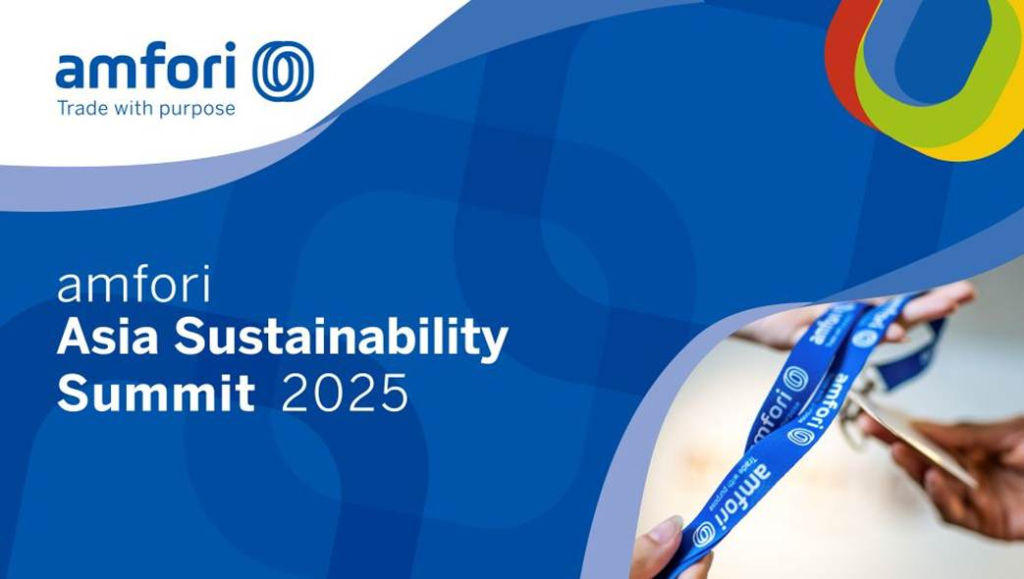
After an inspiring amfori Europe Sustainability Summit, amfori is now heading to Asia for the amfori Asia Sustainability Summit, taking place on 5 November 2025 in Hong Kong SAR, China.
Themed “Supply chain resilience in Asia in the face of challenges in a volatile world”, this event builds on the momentum of last year’s successful Asia Sustainability Summit in Hong Kong SAR, China and focuses on strengthening responsible and resilient supply chains in a rapidly evolving global environment.


